

Can Dashcam Footage Prove Fault in a New Jersey Crash?
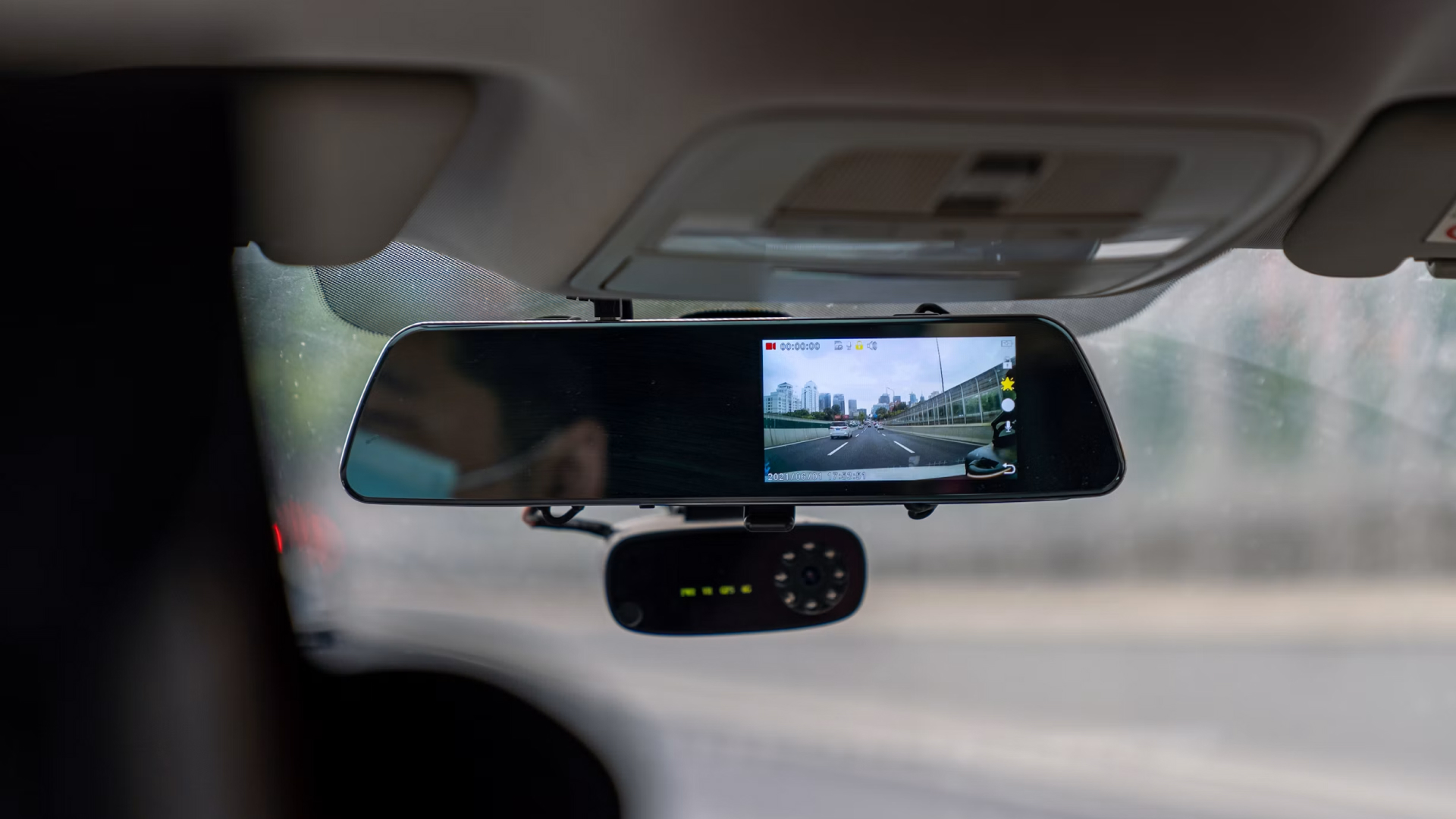
Dashcam footage can prove fault in a New Jersey crash, and in the right case it is the single most important piece of evidence you will have. But video almost never ends the fight by itself. The other side will hire experts to reinterpret it, and New Jersey law leaves the final call on fault to a jury.
We learned that lesson firsthand in a case we handled in Middlesex County Superior Court. The case ran nearly five years, went up to the Appellate Division, and settled for $2.325 million in 2026, shortly before jury selection.
What happened in the case?
Our client was a passenger in a vehicle that was traveling on the New Jersey Turnpike. An NJ Transit bus struck the box truck, in which our client was a passenger, from behind, causing serious and permanent injuries necessitating surgical intervention.
The bus had an onboard dashcam. The footage captured the moments leading up to impact. The bus driver's account was that the box truck had cut in front of him. The video told a different story.
Based largely on that footage, the trial judge granted summary judgment and found NJ Transit 100% responsible for the crash. That ruling took the question of fault away from the jury entirely. NJ Transit appealed.
The case was covered twice by the New Jersey Law Journal, first when the Appellate Division ruled in January 2026 and again when the case settled in July 2026.
Why did the Appellate Division send the case back to a jury?
In New Jersey, deciding who caused a crash and how much each driver is to blame is the jury's job, not the judge's. The Appellate Division held that the trial court "improperly usurped the jury's fact-finding role as to the issues of proximate causation and comparative negligence" and reversed the summary judgment ruling.
Here is the legal reasoning in plain terms. A judge can only decide a case without a trial when the evidence is so one-sided that no reasonable jury could see it any other way. R. 4:46-2(c). The NJ Transit had hired an accident reconstructionist and a forensic video expert who said the bus was traveling between 62 and 65 miles per hour while the box truck was moving at only 30 to 33 miles per hour, well under the 65 mile per hour limit. Their position was that the truck's slow speed impeded traffic and contributed to the crash.
The appellate panel did not say the truck driver was at fault. It said a reasonable jury could weigh that evidence and decide the question for itself. Under New Jersey's comparative negligence statute, N.J.S.A. 2A:15-5.1, a jury assigns a percentage of fault to each party, and that percentage controls how much each party pays. That allocation belongs to the jury.
The takeaway is uncomfortable but important: even video that clearly shows a rear-end hit does not automatically mean 100 percent fault on the rear driver.
Can dashcam footage prove fault in a New Jersey crash?
It can, and in this case it did the heavy lifting. The footage contradicted the bus driver's version of events. Without it, the case would have been a credibility contest, which is exactly the kind of case insurers like to defend.
But video has limits you should understand:
- Video shows what happened, not why. Speed, following distance, and reaction time still have to be interpreted, and both sides will bring experts to do that.
- Video can cut both ways. Here, the defense used the same footage to argue the box truck was going too slowly. New Jersey law prohibits driving so slowly that you impede the normal flow of traffic, N.J.S.A. 39:4-97.1, and the defense built its comparative negligence argument around that.
- Video disappears. Buses, trucks, and rideshare vehicles often overwrite footage within days or weeks. If no one demands it in writing right away, it may be gone.
How was the settlement reached?
Through preparation for trial, not by asking nicely. After the Appellate Division sent the case back, both sides briefed pretrial motions and jury selection was approaching. On damages, both the plaintiff's and defense medical experts agreed our client suffered a spinal fracture in the crash.
The case settled for $2.325 million the day of trial.
Results may vary depending on your particular facts and legal circumstances.
What this means for you?
If you were hurt in a crash involving a bus, a commercial truck, a rideshare vehicle, or any car with a dashcam:
- Get the video preserved now. A written preservation demand should go out to the company within days, not months. Commercial systems overwrite footage on a short cycle.
- Do not assume a rear-end hit is an automatic win. Expect the other side to argue you or your driver contributed. The evidence has to be built to answer that.
- Watch the clock on public entities. Transit agencies, counties, and towns are public entities. Claims against public entities in New Jersey generally require a notice of claim within 90 days of the accident under the Tort Claims Act, N.J.S.A. 59:8-8, on top of the two-year statute of limitations for injury claims, N.J.S.A. 2A:14-2. Missing the 90-day notice can end a case before it starts.
- Document your own injuries and treatment from day one. Causation of later surgeries was the central damages fight here. Consistent records make that fight winnable. See our post on documenting your injuries after an accident.
- Consider a dashcam of your own. A $60 camera can be the difference between your word and proof.
For more on how fault is sorted out in commercial vehicle cases, read who is liable in a New Jersey truck accident.
Frequently asked questions
Is the rear driver always at fault in a New Jersey rear-end crash?
No. New Jersey applies comparative negligence under N.J.S.A. 2A:15-5.1, so a jury can assign a share of fault to the front driver if there is evidence that driver contributed, for example by traveling far below the flow of traffic. A rear-end hit creates a strong inference against the rear driver, but it is not automatic.
How do I get dashcam or bus camera footage after a crash?
Send a written preservation demand to the company that owns the vehicle as soon as possible, identifying the date, time, location, and vehicle number. Once a lawsuit is filed, the footage can be obtained through formal discovery. Acting early matters because many systems overwrite video within days or weeks.
Can I still recover if I was partly at fault?
Yes, as long as your share of fault is not greater than 50 percent. Under N.J.S.A. 2A:15-5.1, your recovery is reduced by your percentage of fault. If you are found 51 percent or more at fault, you recover nothing.
How long do I have to bring a claim against NJ Transit or another public entity?
Generally, you must serve a notice of claim within 90 days of the accident under N.J.S.A. 59:8-8, and the lawsuit itself must be filed within two years under N.J.S.A. 2A:14-2. The 90-day notice requirement is strict, and late notice is permitted only in limited circumstances.
Does dashcam footage guarantee a settlement?
No. Video is powerful evidence, but the other side can retain experts to interpret it differently, and New Jersey law leaves fault allocation to the jury. Strong video plus thorough trial preparation is what creates leverage.
Talk to a New Jersey injury lawyer who prepares for trial
If you or a family member were hurt in a crash on the Turnpike, the Parkway, or anywhere in New Jersey, and there may be video of what happened, the time to act is now. Embden Law, LLC offers a free consultation, in English or Spanish, and we handle injury cases on a contingency fee: no fee unless we recover for you. Clients may be responsible for case costs and expenses. Call (973) 975-0995 or contact us online to talk through your situation.
This article is for general informational purposes only and is not legal advice. Reading it does not create an attorney-client relationship with Embden Law, LLC. Every case is different; contact a New Jersey personal injury attorney about your specific situation. Results may vary depending on your particular facts and legal circumstances. Attorney Advertising.
Richard C. Embden, Esq., is the founder of Embden Law, LLC, a New Jersey personal injury firm based in Parsippany that represents people hurt in motor vehicle crashes, falls on unsafe property, dog attacks, and workplace accidents.
