

Uninsured Driver or Hit and Run in NJ? How UM/UIM Coverage Works
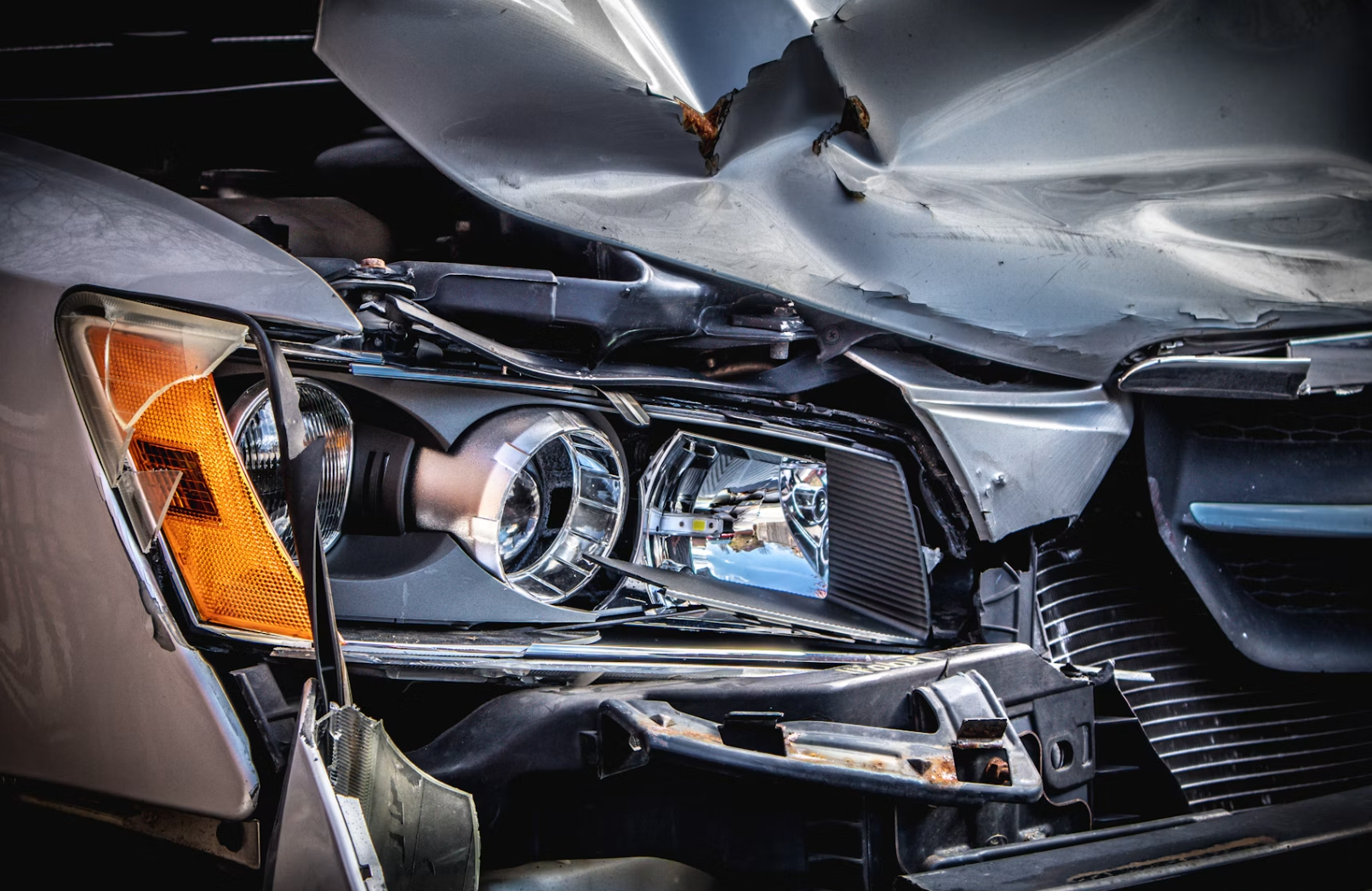
The driver who hit you has no insurance, or a small policy that won't come close to covering your injuries. Or the driver took off, and you have no plate number, no name, nothing. Does that mean you're out of luck?
Not necessarily. There may be coverage under your own car insurance that steps into the shoes of the driver who hit you. It's called uninsured/underinsured motorist coverage, or UM/UIM. You pay for it every month as part of your premium. Most people never look at it until the day they need it.
What is UM/UIM coverage?
When someone hits you, their insurance is supposed to pay for your injuries. If they have no insurance, there's nobody to pay. If they have a small policy, it runs out fast.
Your UM/UIM coverage fixes that problem. It steps in and pays what the other driver's insurance should have paid.
- UM (uninsured motorist) applies when the other driver has no insurance at all, or when it was a hit and run and the driver was never identified.
- UIM (underinsured motorist) applies when the other driver has insurance, but the policy is too small to cover your injuries.
One thing surprises people. You're making a claim against your own insurance company, and it will treat you like any other claimant.
Do you have this coverage?
If you have a standard New Jersey auto policy, you have UM coverage. New Jersey requires it under N.J.S.A. 17:28-1.1. The minimum went up on January 1, 2026, to $35,000 per person and $70,000 per accident. If your policy hasn't renewed since then, you may still have the older minimum of $25,000 and $50,000.
UIM is optional, but most people who buy more than the bare minimum have it. If you bought a basic policy to save money, you probably have no UM/UIM coverage at all.
The quickest way to find out is to look at your declarations page. That's the one or two page summary that came with your policy. Look for "Uninsured Motorist" and "Underinsured Motorist" and the dollar amounts next to them.
How much does it pay? A simple example.
UIM fills the gap between what the other driver's insurance pays and your own UIM limit. It doesn't add on top.
Here's a made-up example. You carry $100,000 in UIM coverage. The driver who hit you has a $35,000 policy, and your injuries are worth much more than that.
- The other driver's insurance pays its full $35,000.
- Your UIM coverage pays up to $65,000 more. That's your $100,000 limit minus the $35,000 you already got.
- Your total possible recovery is $100,000.
Two things catch people off guard. If your UIM limit is the same as the other driver's policy, or smaller, you get nothing extra. And New Jersey doesn't allow stacking, so if you have two cars or two policies, you can't combine the limits.
The other driver's policy is a number you don't control. Your own UIM limit is the one you chose.
The one mistake that can wipe out your claim
Don't accept a settlement from the other driver's insurance company before you notify your own insurance company in writing.
This comes from a New Jersey case called Longworth v. Van Houten. Before you take the other driver's policy limits, your own carrier must get written notice and a chance to respond. It then has a short window to either let you take the settlement, or pay you that same amount itself and go after the other driver.
If you cash the other driver's check without sending that notice, your own carrier can deny your UIM claim completely.
The order matters. First, the claim against the other driver. Second, written notice to your own carrier. Third, the settlement. Fourth, the UIM claim.
What if it was a hit and run and you have nothing on the other car?
You can still have a claim. New Jersey treats a hit and run as an uninsured motorist claim. If the driver who hit you is never identified, your own UM coverage steps into that driver's shoes and pays what their insurance would have paid.
You don't need a plate number, a name, or a description of the driver to make the claim. What you do need is proof that the crash happened the way you say it did, because there's no other driver to confirm your story. Insurance companies look hardest at these claims.
Here's what helps:
- Call the police from the scene, or the same day. A police report is the single most important document in a hit and run claim. Your policy will likely require it.
- Tell your own insurance company right away. Don't wait to see if the other driver turns up.
- Photograph everything. Your car, the scene, debris in the road, paint transfer, skid marks. Paint from the other car on your bumper can matter.
- Get names and numbers from anyone who saw it. A witness who saw the other car leave is worth more than almost anything else.
- Look for cameras. Nearby homes, stores, traffic cameras, and your own dashcam. Our post on dashcam footage in a New Jersey crash shows why video matters so much. Camera footage gets erased fast, so ask quickly.
If the other driver is later identified and turns out to have insurance, the claim shifts from UM to a regular claim against that driver, with UIM available if their policy is too small.
How long do you have?
A UM/UIM claim is a claim under your insurance contract, so you have six years from the accident under Green v. Selective Insurance Co. But the claim against the other driver has a two-year deadline under N.J.S.A. 2A:14-2, and the UIM claim usually comes after that one. In practice, the two-year deadline is the one that controls.
What to do now
- Find your declarations page today. Check the UM and UIM amounts, and look for the words "limitation on lawsuit." If you have that option, the verbal threshold under N.J.S.A. 39:6A-8 generally applies to your UM/UIM claim too.
- Don't give the other driver's insurer a recorded statement or sign anything until you know how much coverage they have and what your own UIM limit is.
- Don't take a settlement without written notice to your own carrier. This is the most expensive mistake in these cases.
- If it was a hit and run, call the police the same day and save everything. See our post on documenting your injuries after an accident.
- Before your next renewal, raise your UM/UIM limits to match your liability limits. It's usually the cheapest coverage on the policy, and it's the only coverage that protects you instead of the other driver.
Frequently asked questions
Can I make a UIM claim if the other driver has the same coverage I do?
No. In New Jersey, UIM only pays when the other driver's policy limit is lower than your UIM limit, and your limit is reduced by what the other driver's insurance pays. If the two numbers are equal, there's nothing left for UIM to pay.
Can I use UM/UIM if I was a passenger or walking?
Often, yes. UM/UIM coverage generally follows the person, not just the car. You may be covered by the policy on the car you were in, your own policy, or a policy of a family member you live with. Which one pays first depends on the policy language.
Who decides if my insurance company and I disagree?
Most UM/UIM disputes go to arbitration instead of a jury. A panel of arbitrators decides who was at fault and what your injuries are worth. Your insurer will show up with a lawyer and medical experts, so you should be just as prepared.
Do I need a lawyer to make a claim against my own insurance company?
You're not required to have one. But your insurer will treat the claim as a fight, the settlement steps have traps that can void the claim, and the value of your injuries will be disputed. A free consultation will tell you whether the claim is worth pursuing.
Final thoughts
If you were hurt by a driver with no insurance or too little, don't assume you're out of options. The coverage you've been paying for may be the answer. Your health comes first, so get treatment. Then find your declarations page and call us before you talk to any insurance company.
At Embden Law, LLC, we handle uninsured and underinsured motorist claims across New Jersey from our office in Parsippany. The consultation is free, in English or Spanish, and we work on a contingency fee: no fee unless we recover for you. Clients may be responsible for case costs and expenses. Call (973) 975-0995 or contact us online. If you're searching for an injury lawyer near you in New Jersey, we're here to help.
This article is for general informational purposes only and is not legal advice. Reading it does not create an attorney-client relationship with Embden Law, LLC. Every case is different; contact a New Jersey personal injury attorney about your specific situation. Attorney Advertising.
Richard C. Embden, Esq., is the founder of Embden Law, LLC, a New Jersey personal injury firm based in Parsippany that represents people hurt in motor vehicle crashes, falls on unsafe property, dog attacks, and workplace accidents.
